Lithuania
The Edge of the WorldLithuania is presented through family history and music rather than as a setting for the contemporary action. Its significance lies in Anna’s Lithuanian origins and in a musical tradition that reaches Shay Maloney through Ollie Pietruska’s research, linking an uncertain ancestral past to Shay’s own playing and creative life.
Ancestry and Historical Context
Ollie explains that Anna was Lithuanian and that her records concern a region that would have been considered part of Prussia at some point. The conversation places this history within a complicated shifting geography, rather than treating present-day national borders as a simple guide to the past. In the family account, Anna’s Lithuanian background is distinct from Shay’s Danish ancestry, which Ollie identifies as coming from Shay’s maternal side.
Anna’s Musical Life
Anna’s history gives Lithuania a human and artistic presence in the narrative. She was an accomplished musician who played many instruments, and at eighteen she became principal lutist for the royal court—an unusual position for a peasant girl. Ollie has not established how she learned so many instruments as a child; he suggests that an uncle who may have made instruments for the nobility could have given her access to them.
The surviving account of Anna’s life has a significant gap of about ten years after she left the court, possibly to marry. Later records place her travelling through the countryside and playing folk music on various instruments among religious sects. She eventually separated from religion as well, travelling alone, playing in villages she encountered, and writing poetry that Ollie has not found. Her path from court musician to independent village performer connects musical inheritance with a life that resisted settled institutions.
Music as a Link Across Generations
Ollie shares an untitled recording associated with Anna’s musical world. Lithuanian students recorded it in the 1970s from parchments held in the National Museum. Its deep stringed bass and layered female chanting surprise Shay, who had expected something rougher and simpler. Ollie connects the sound to Lithuania’s Christianisation in the thirteenth century, which he says heavily influenced traditional music through Gregorian chant. He also notes the presence of opera around the royal court, while allowing that it may have been among the things Anna left behind.
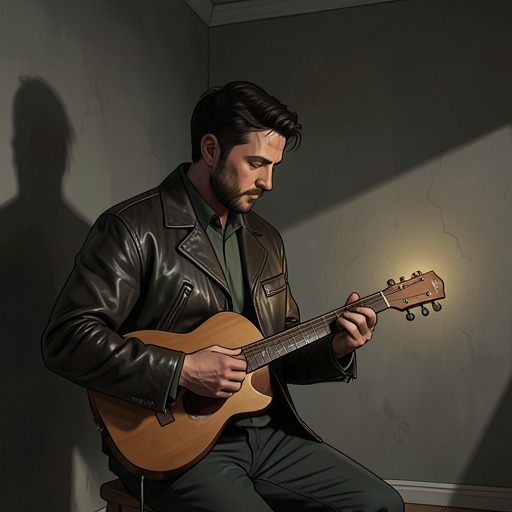
The recording’s influence resurfaces when Shay improvises a new song: Ollie recognizes a resemblance to the Lithuanian folk music he had played for him, and Shay realizes that this is the source of a musical idea that had been troubling him. The connection is not presented as proof that Shay inherited Anna’s particular musical abilities by blood; it takes shape through listening, memory, and creative response.
Objects and Continuing Influence
Music associated with this history also accompanies Shay beyond the conversation about Anna. At Ollie’s flat, Shay retrieves his harmonica, penny whistle, and an instrument Ollie has given him, whose name Ollie still withholds. Shay turns its handle and finds that it can produce a tune he recognizes, then works out more of the melody on its keys. The instrument and the earlier recording make musical inheritance tangible as something encountered and learned, while Anna’s history supplies a wider context for Shay’s growing musical connection to a family past he did not know.